SEC Filing Analysis Library
Deep breakdowns of recent 10-K and 10-Q filings — major risks, accounting red flags, cash flow quality, and competitive moat, based on the actual filing text from EDGAR.
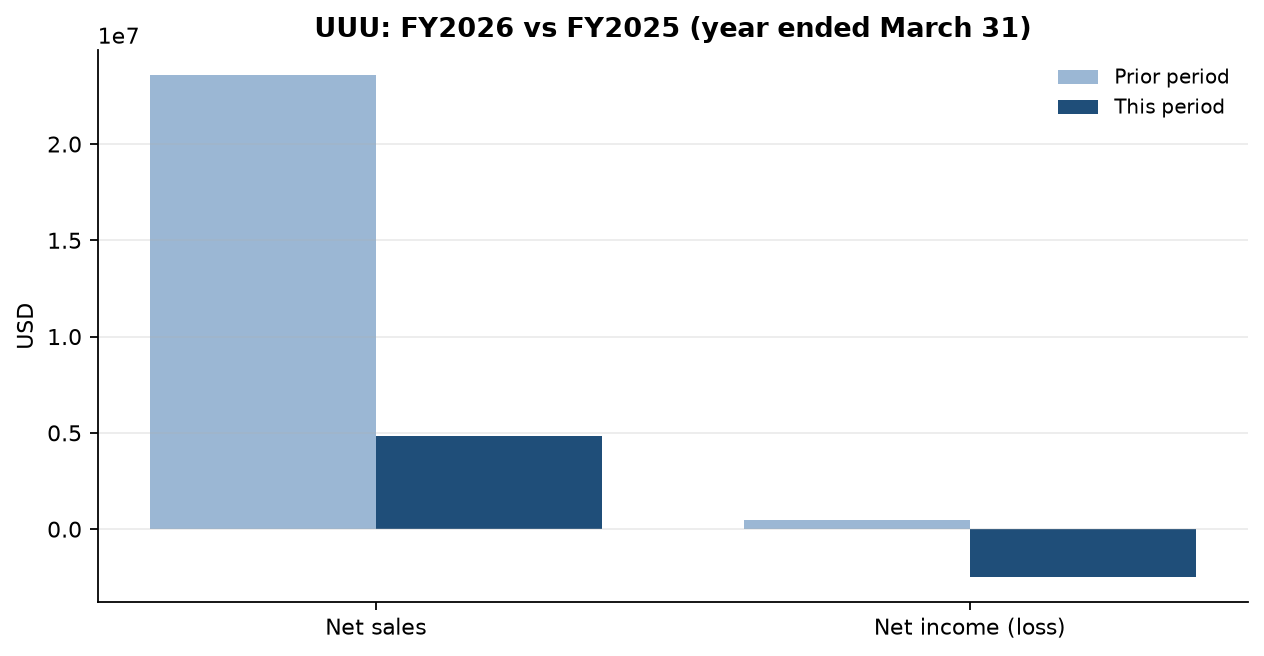
This is no longer a safety-products company — it sold that business, its brands, and its name. The upside case is now a related-party crypto bet in which an insider-linked entity holds a contractual first claim of up to $93.75 million on the venture's proceeds — more than ten times the entire market value of the stock held by outside shareholders.
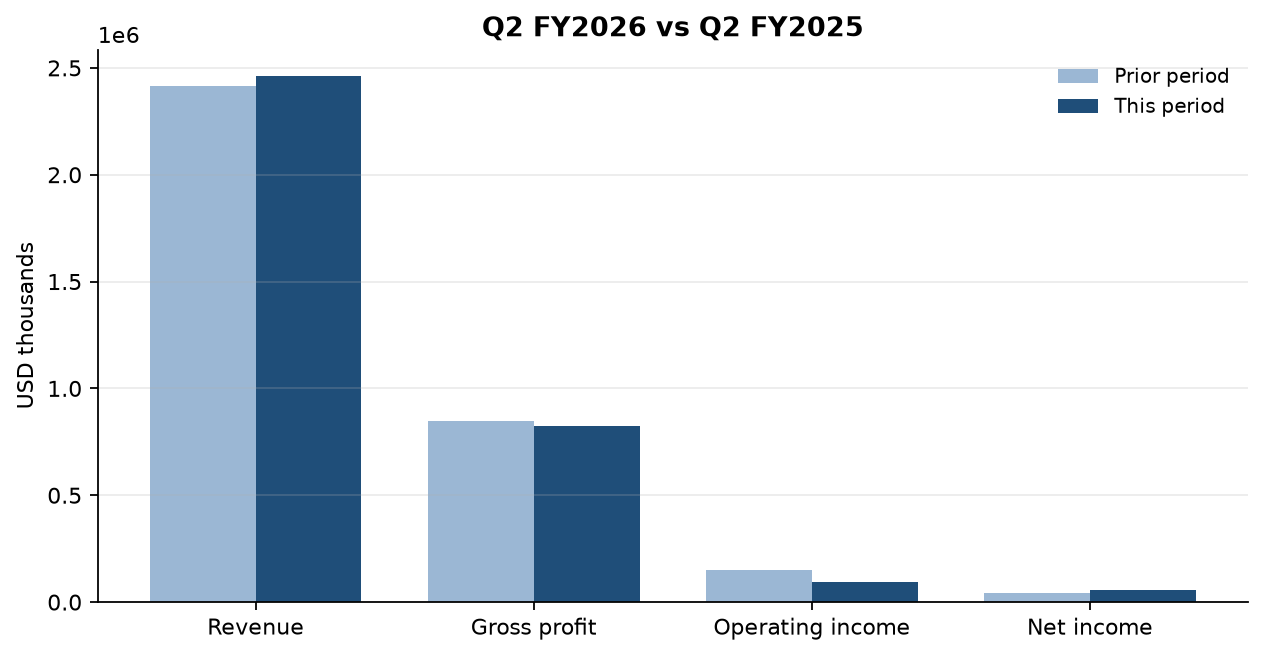
The jump in quarterly EPS from $0.63 to $0.86 is manufactured below the operating line: operating income fell 36% while a $63.3M swing in non-operating 'other income' and a smaller share count (60.9M vs 63.4M basic) did all the lifting. The core services business is being squeezed, not recovering.
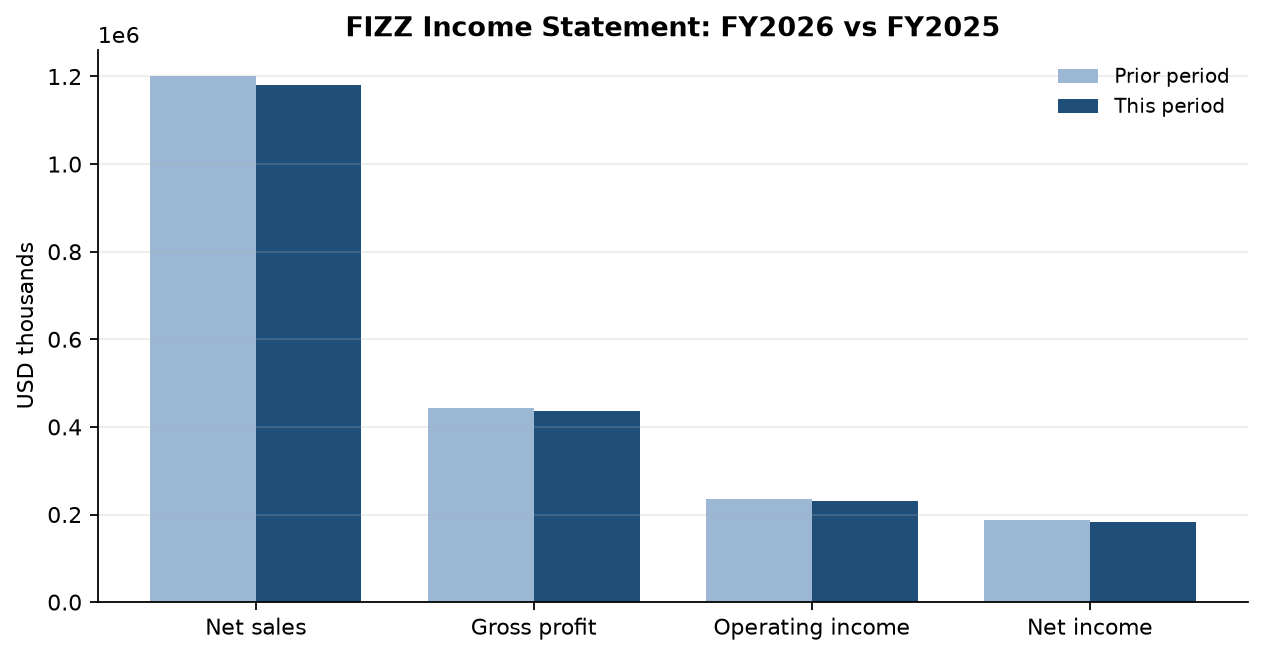
Reported revenue looks merely soft (-1.7%), but it hides a 6.7% case-volume decline offset by a 5.2% price increase — a premium, discretionary brand shedding that much volume while pushing price is a demand-elasticity warning, not evidence of pricing power. The tell to watch is whether volume stabilizes at the new price points.
The reported profit is being cushioned by non-core equipment-sale gains and a debt-financed lease-fleet build, masking how weak the core manufacturing cycle has become; the real test is whether the $426.7M syndication inventory converts back to cash at a gain.
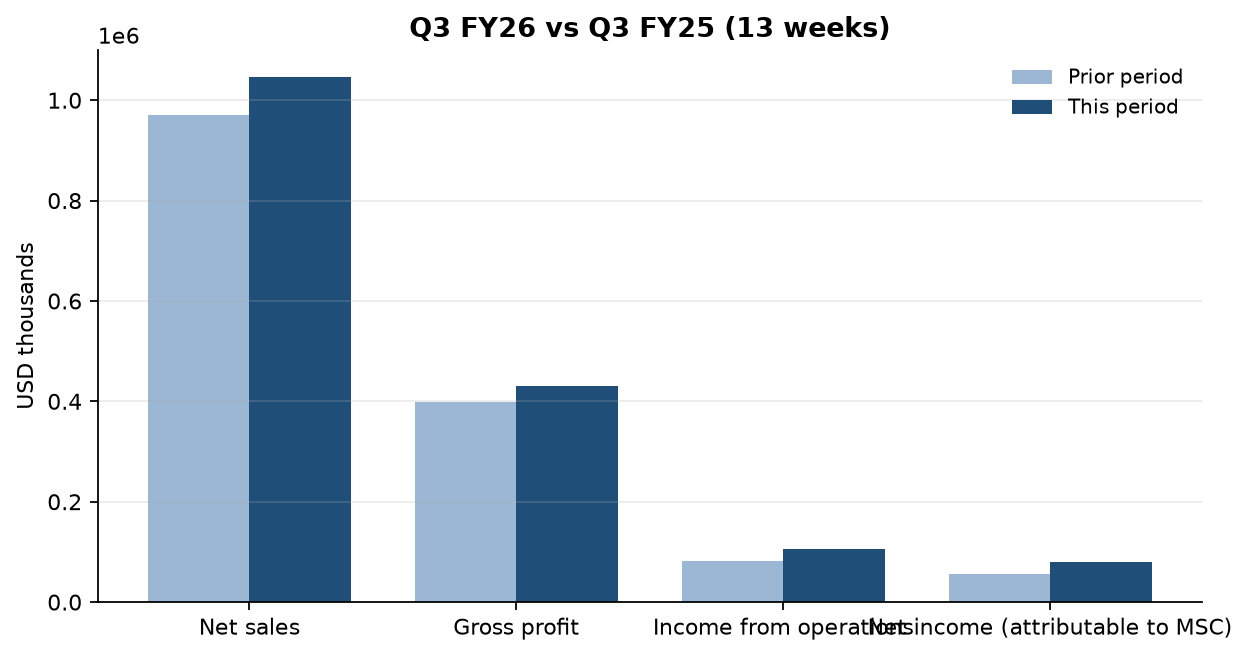
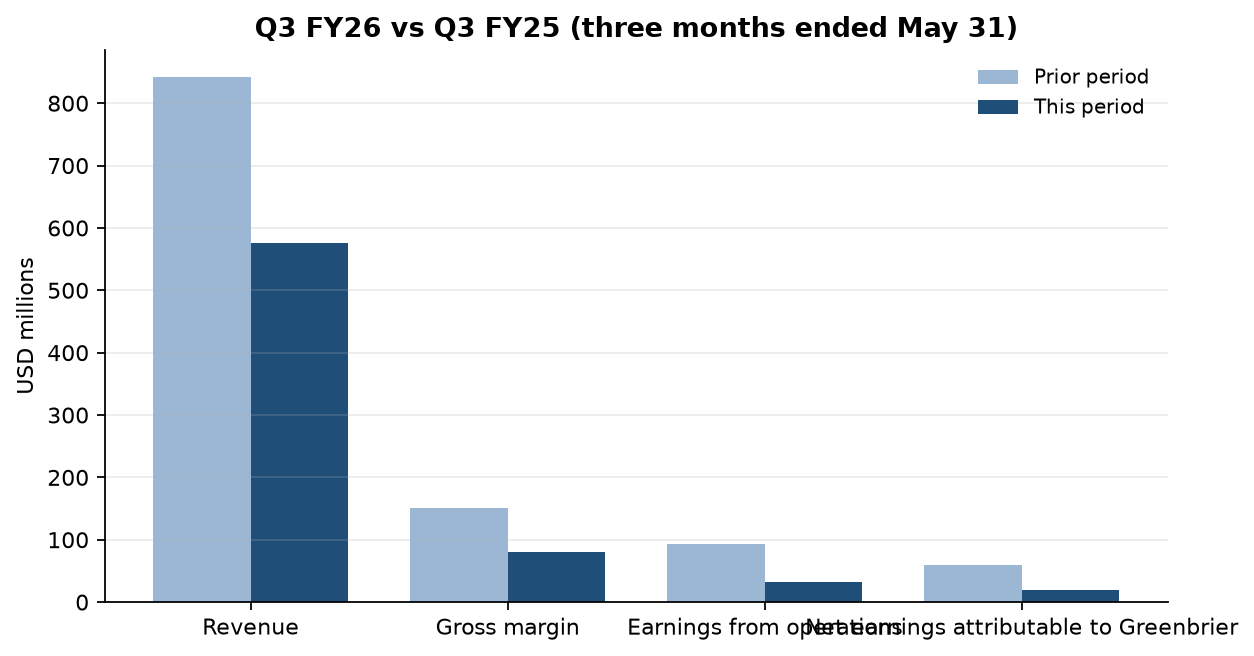
The 41% Q3 EPS surge overstates the underlying trend: nine-month operating cash flow actually fell as an inventory build and a payables reversal absorbed the earnings gain, while a one-time ERC credit and an expanded receivables-sale program helped optics — with a top-heavy short-term debt stack now the key thing to monitor.
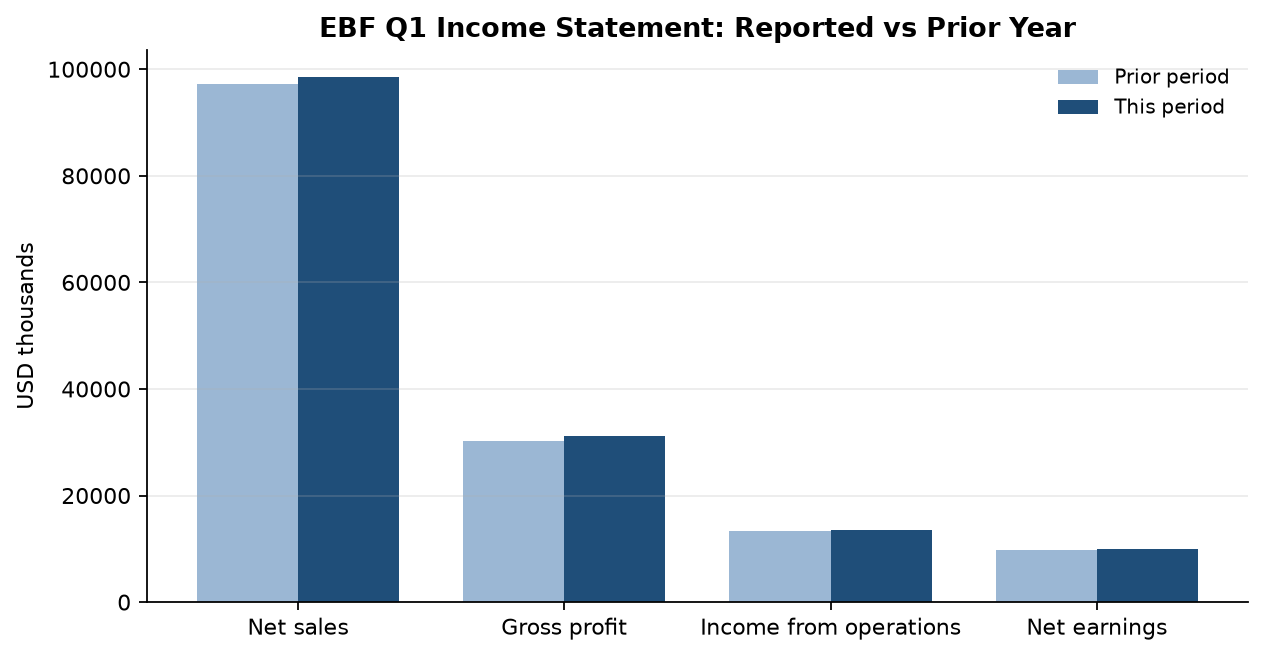
The steady headline — sales up 1.5%, EPS up a penny, cash piling up — hides that all the growth was bought: strip out the NEC/ESS and CFC acquisitions and the filing's own pro forma shows sales down ~2.4% and net earnings lower, so the dividend and a $107M goodwill load now rest on a still-shrinking organic base.
This is no longer a modular-construction story but a serially recapitalized micro-cap: in roughly two years it reverse-split 1-for-20, then 1-for-64, then 1-for-10 (a cumulative ~1-for-12,800) down to about 1.3 million shares, funding a pivot into oil & gas and IoT with going-concern-level toxic convertibles and merchant cash advances. The capital structure, not the business segments, is the real franchise.
The investable story isn't the auto-leasing business, which is shrinking and being dismantled — it's that a ~$5M-market-value China micro-cap is repackaging its Nasdaq listing as an 'AI infrastructure/data center' play (note the AIHS ticker and a new Wyoming 'Green Energy Capital' entity) with zero definitive agreements, funded by a reverse split and PIPE dilution.
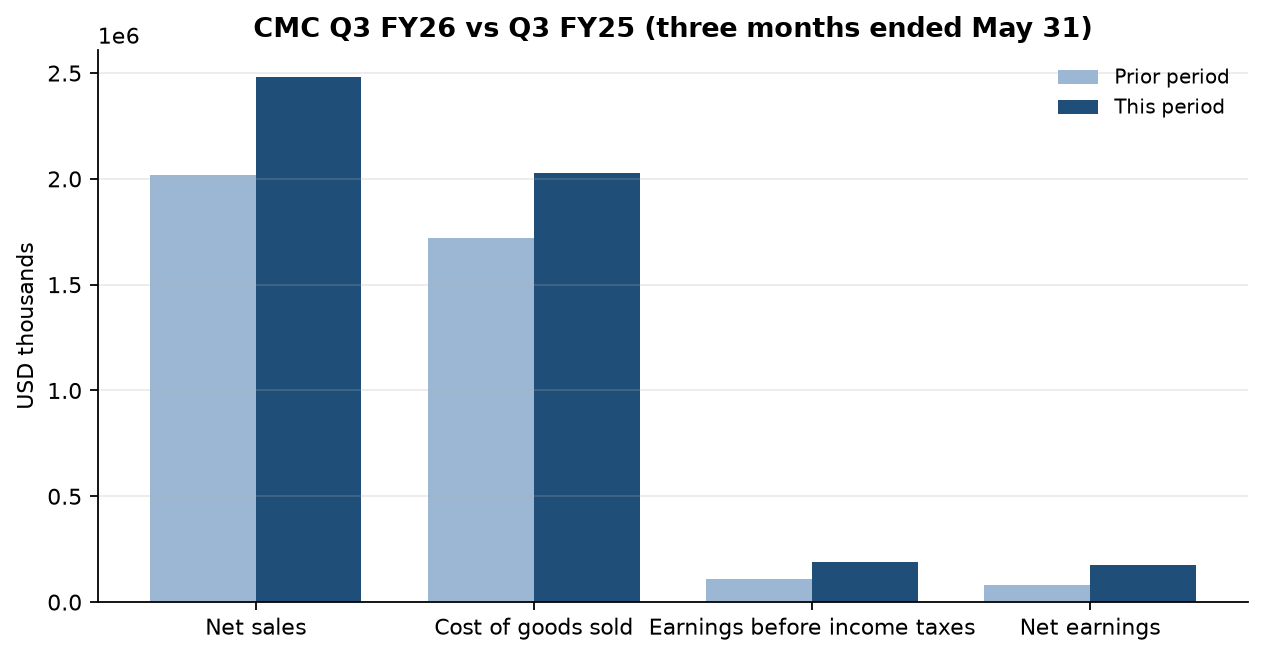
The headline reversal from a $67M loss to record $443M nine-month earnings is real in dollars but largely mechanical — the absence of last year's $358.5M litigation charge plus a sub-8% effective tax rate — while a $2.5B debt-funded precast acquisition has tripled goodwill and quadrupled interest, shifting CMC from a clean balance sheet to a leveraged integration story.
Air T markets itself as a Buffett-style compounder, but its largest single revenue source — FedEx at ~35% — rides on dry-lease master agreements that expire August 31, 2026 and that, by the company's own admission, FedEx is already free to cancel today; the entire diversified, debt-funded structure hinges on a renewal that is still only in negotiation.
The buried tell isn't the survival data — it's that management dismantled its own commercial team while publicly fighting for approval, converting REPL into a pure binary bet on the Aug 2 FDA action. The FDA has now twice rejected the identical IGNYTE dataset and even walked back its Type A concessions, suggesting the problem is trial design, not analysis depth.
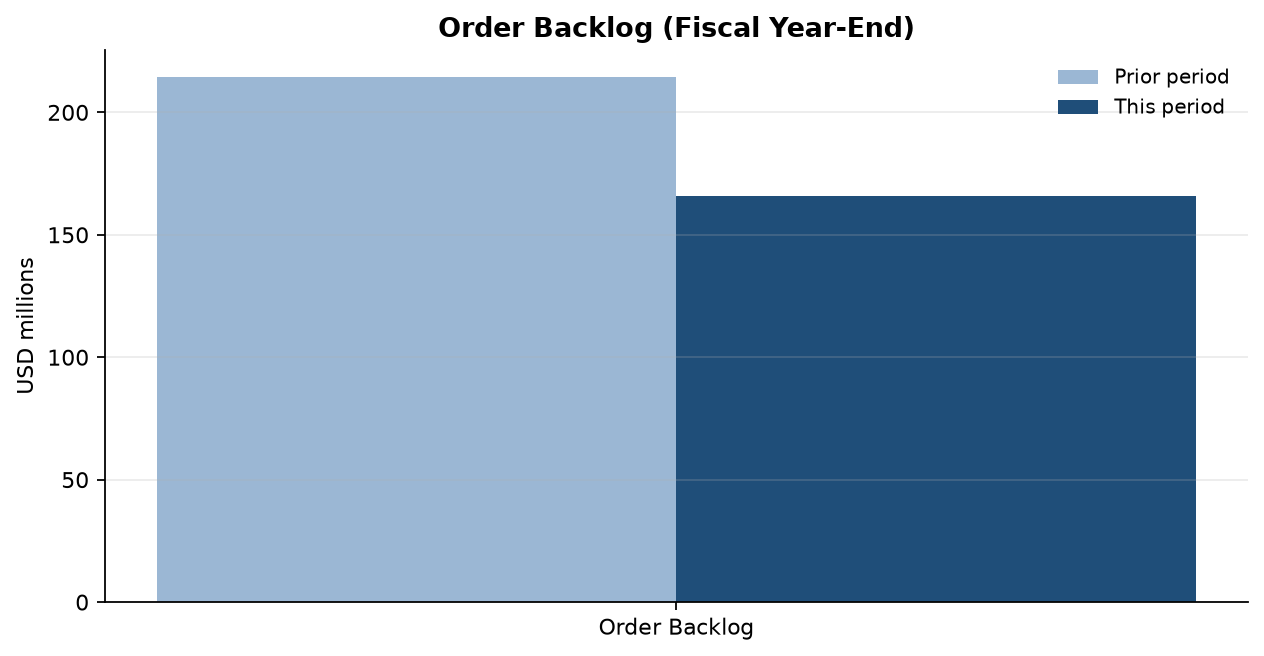
FY2026 results almost certainly benefited from a full year of Nu Aire (versus roughly a half year in FY2025), but the order backlog — the firm's best leading indicator since products ship into buildings yet to be built — shrank ~23%. The acquisition is flattering a contracting forward book.
Korn Ferry's only structurally durable earnings — Digital, at a 31% margin with growing recurring subscriptions on a real 12-billion-datapoint data moat — are buried inside a portfolio whose biggest line, Executive Search, is a low-barrier, people-portable, AI-threatened business; the FY2027 switch to regional reporting will make that all-important mix shift harder, not easier, to track.
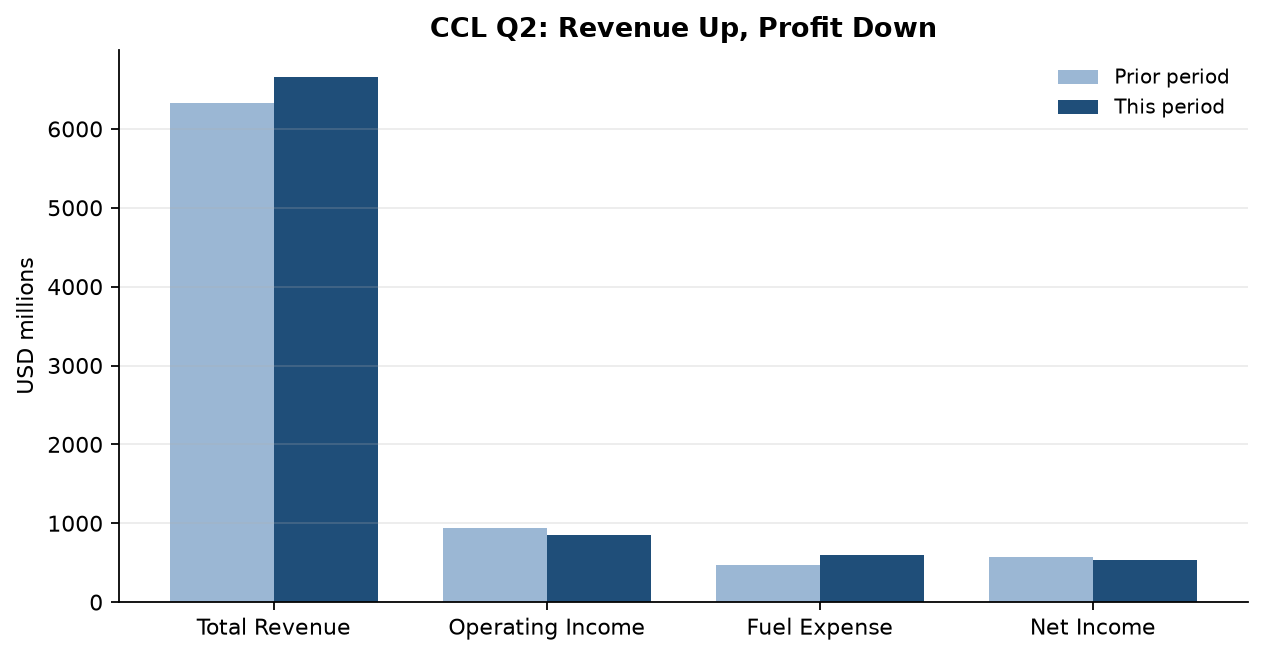
Carnival's H1 net income nearly doubled, but operating income slightly declined — the entire profit improvement came from lower interest expense and the absence of last year's debt-extinguishment charge, while record revenue was eaten by fuel and labor inflation. The deleveraging and record $9B bookings are real, but the earnings growth is a balance-sheet story, not an operating-leverage one.
The 10-K markets an 'AI-era data management' growth story, but the financing structure — forbearance warrants, convertible debt, PIK interest, an at-the-market equity line, and a fair-value model that explicitly weights a liquidation event — reveals a balance-sheet workout. With material weaknesses still unremediated, the equity is effectively a dilution-financed option on survival rather than a clean AI play.
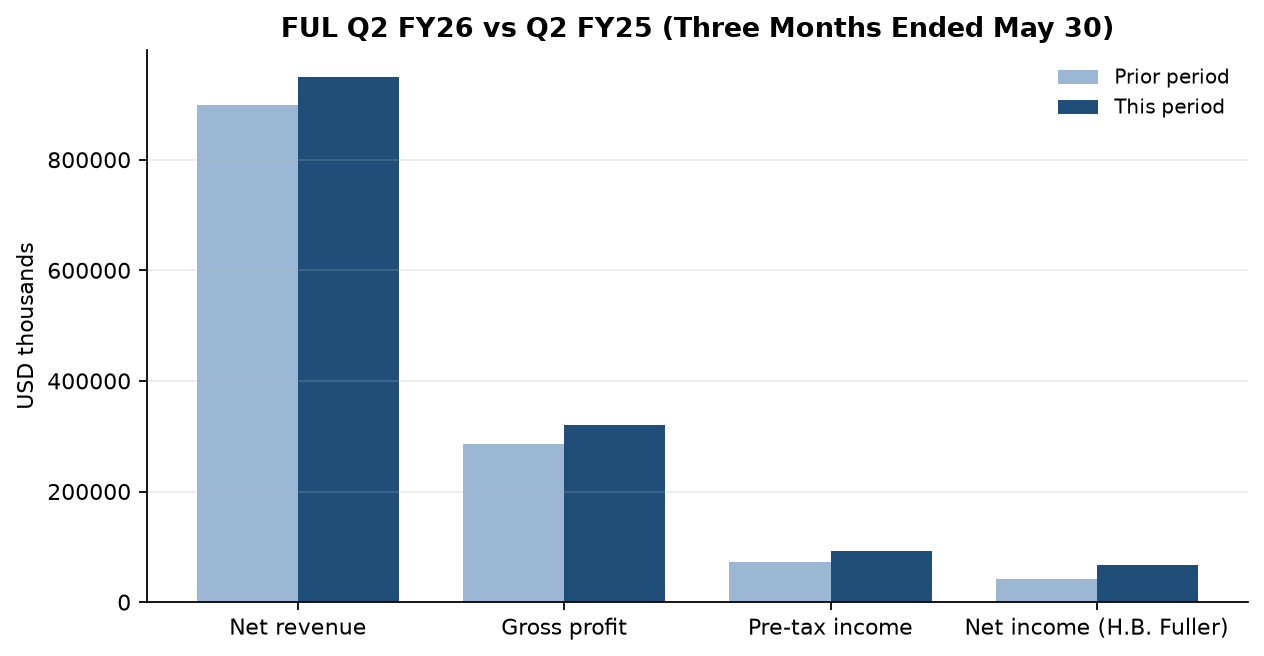
The eye-catching 62% earnings surge is largely an optical artifact of last year's one-time discrete tax charge wearing off; the real, more modest story is genuine gross-margin expansion paired with a goodwill-heavy balance sheet that is about to take on more bridge-financed leverage to buy Advanced Medical Solutions.
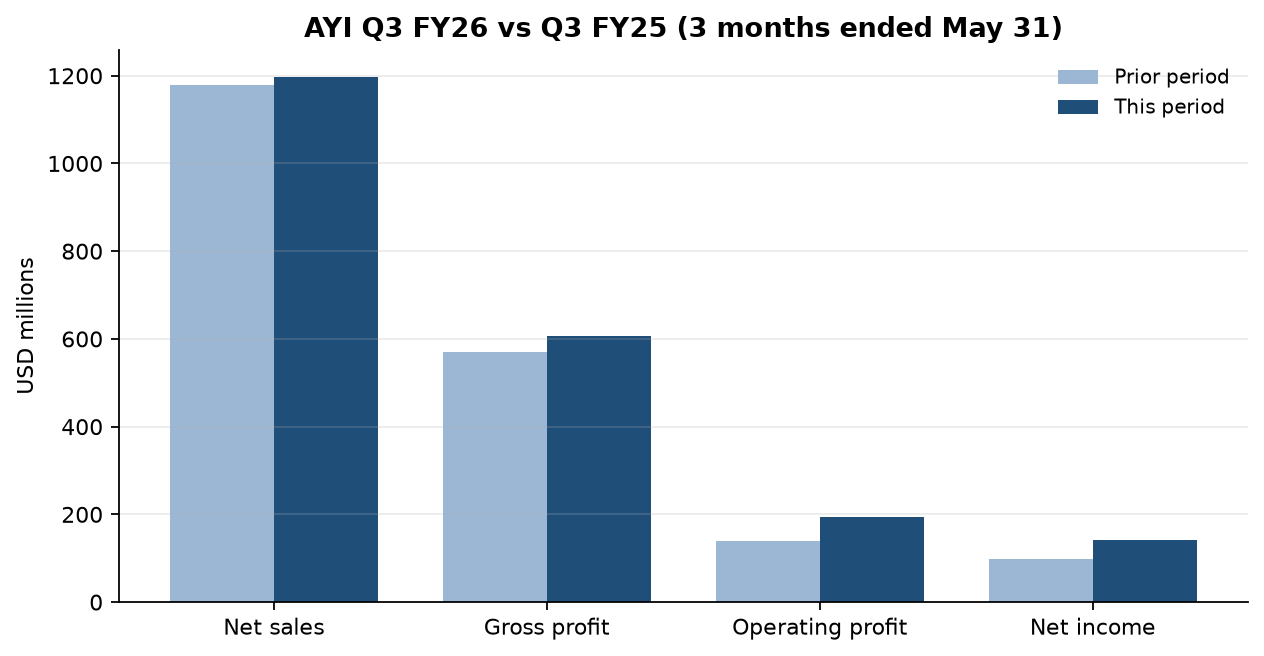
The 46% jump in diluted EPS masks that nearly all the top-line 'growth' came from lapping the QSC acquisition and from buybacks — on a comparable pro forma basis revenue rose only ~1.8% and the core lighting business actually shrank. The durable engine here is margin expansion and capital return, not unit demand.
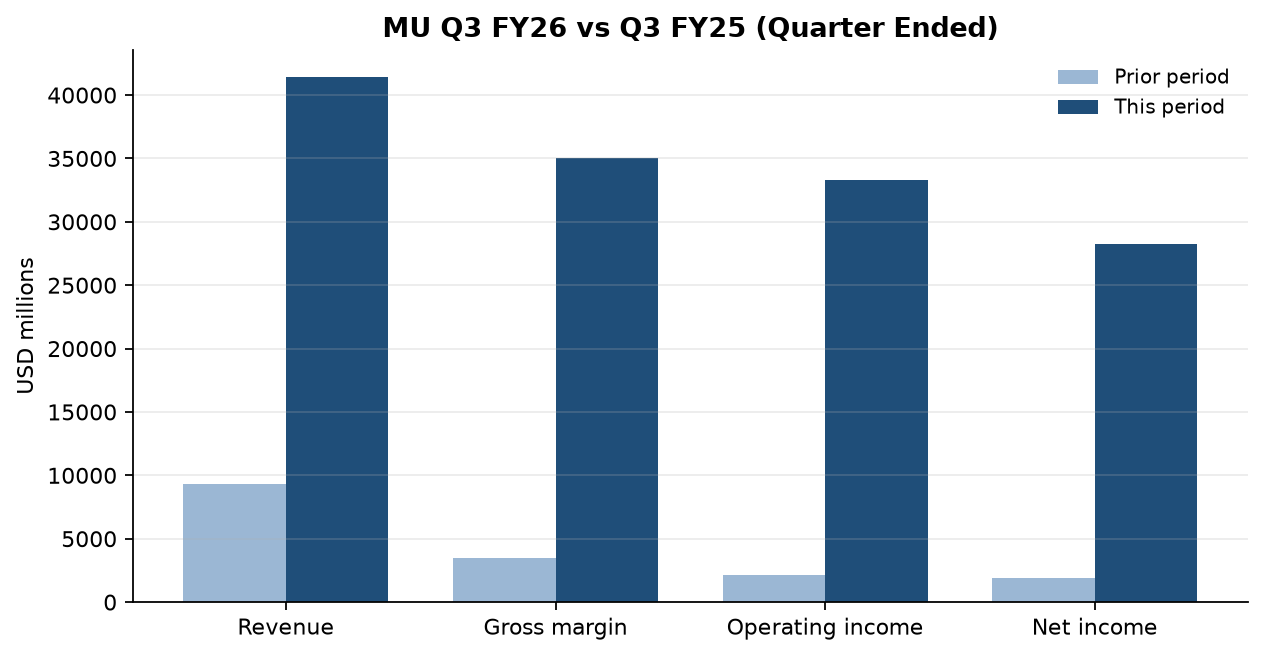
The quarter looks like a structural AI re-rating (85% gross margin, take-or-pay contracts), but it reads like a textbook cyclical peak — the tell is that nearly all of the record profit is sitting in a near-quadrupled receivables balance rather than in cash, and the only direction from 85% DRAM margins is down as rivals add supply.
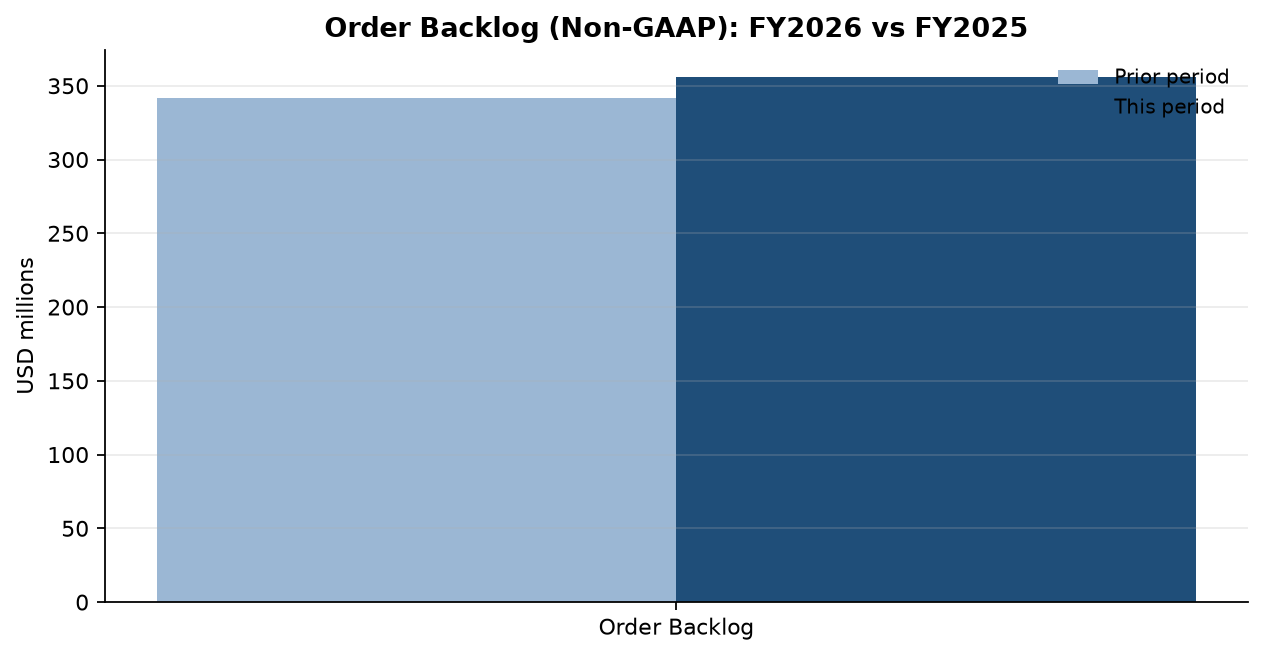
The backlog grew to a record $356.2M, but the variable that actually decides the next two years is landed cost, not demand — China-sourced LEDs/PCBs/ICs and tariffs sit between a healthy order book and the cash it converts to. The Mexico plant (fiscal 2027) and the micro-LED XDC acquisition are the company quietly trying to take back control of its own cost and technology curve.
The durable asset is not Wiley's content per se but its decades-long society publishing alliances and Impact Factor network effects; the heavily promoted AI content-licensing 'growth engine' monetizes that moat but may be a largely one-time archive sale that simultaneously feeds the technology most capable of eroding Wiley's reference and learning franchises.
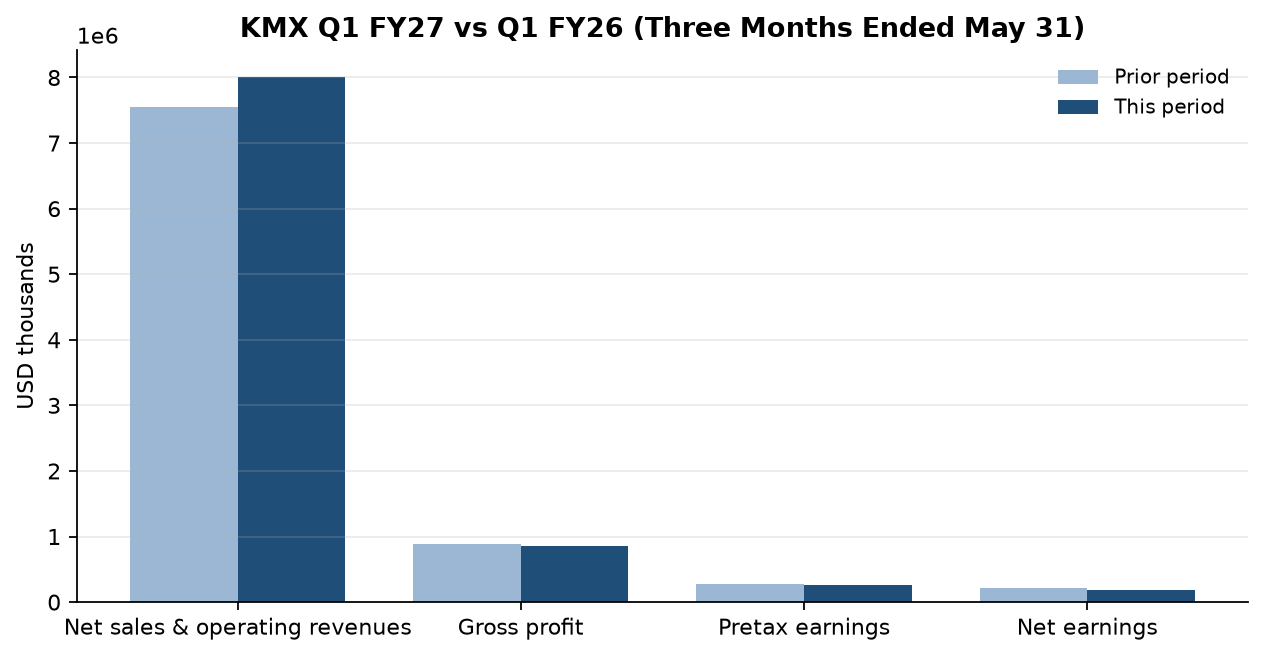
CarMax's top line grew, but the growth was bought rather than earned: used-vehicle gross profit dollars fell as per-unit margins compressed, net earnings dropped nearly 12%, and the company leaned into subprime auto loans while quietly halting its buyback — a lower-quality quarter beneath a superficially solid revenue headline.
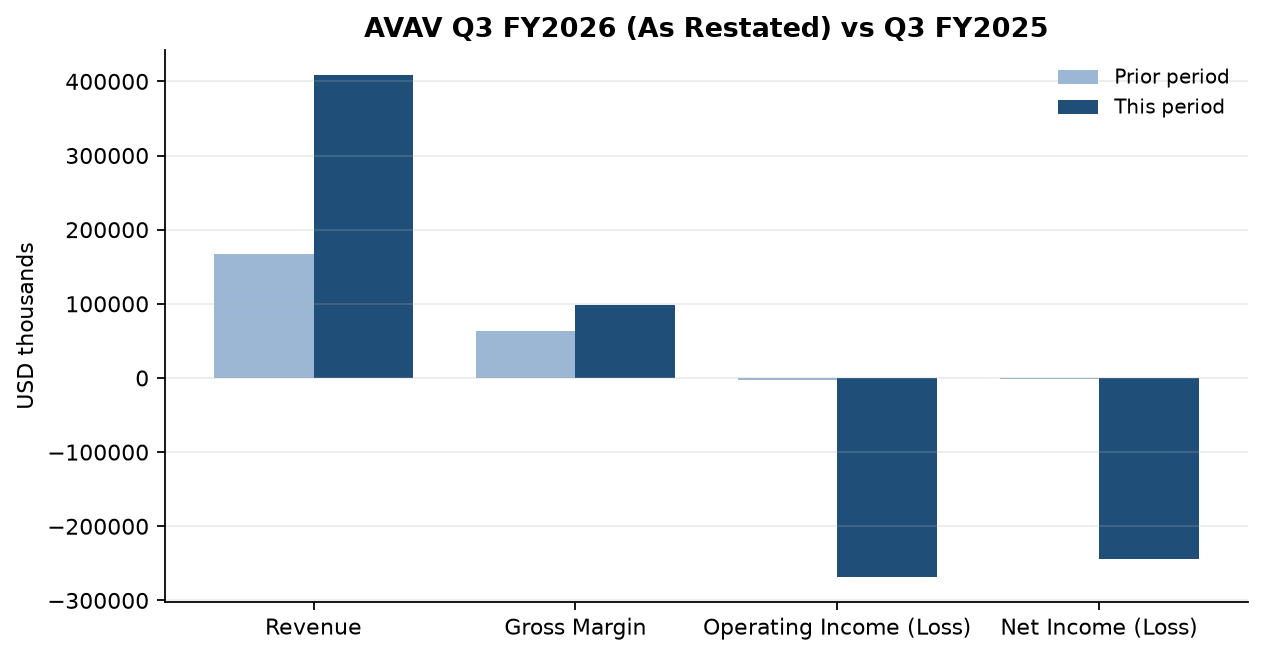
AVAV's blistering top-line growth was bought, not earned — and within three quarters of paying $4B+ for BlueHalo it wrote down $240.7M of the Space unit's goodwill, then had to restate that charge 59% higher because its own controls over the calculation were a material weakness. The growth narrative is intact; the deal economics and the control environment are not.
Through a value lens there is no margin of safety here yet — $61K of revenue, a stockholders' deficit, and a 'going concern' outcome embedded in the company's own warrant math — but a $2.2B post-quarter IPO has shifted the question from survival to execution: whether Cape Station can convert a $7.2B backlog into real power and cash on schedule.
Analyze any stock you own
Premium runs instant AI analysis of any company's latest SEC filing on demand.
Go Premium →